


If you’ve been frustrated by the wild temperature swings lately, you’re not alone, and neither is your pavement. These constant temperature swings trigger freeze–thaw cycles that can quietly weaken road surfaces long before problems show up on top.
What Happens During a Freeze–Thaw Cycle
When temperatures drop below freezing, moisture that has infiltrated pavement expands as it freezes. As temperatures rise, that ice melts, leaving behind voids and weakened material. These repeated cycleswiden existing cracks, create new micro-fractures, and accelerate raveling, potholes, and surface deformation.
Winter maintenance also plays a role. Salting roads is essential to keep routes passable and safe for the public, but deicing salts can accelerate pavement deterioration. Salt lowers the freezing point of water, increasing the intensity of freeze–thaw cycles and allowing moisture to penetrate deeper into the pavement structure. Over time, this can worsen cracking, scaling, and surface breakdown.
Why Recent Weather Makes It Wors
This year’s pattern of frequent temperature swings and precipitation means pavements may experience multiple freeze–thaw events in a single week. Each cycle compounds existing damage
The most important thing to understand: damage is occurring now, even if it’s not fully visible yet. This makes late winter and early spring a critical window for planning early preservation treatments before small issues become structural failures.
RMT’s Solution
The key is acting before visible failure appears. Agencies should review network conditions in late winter and schedule low-cost treatments such as crack sealing and surface treatments ahead of spring moisture intrusion, preventing small distresses from becoming structural repairs.
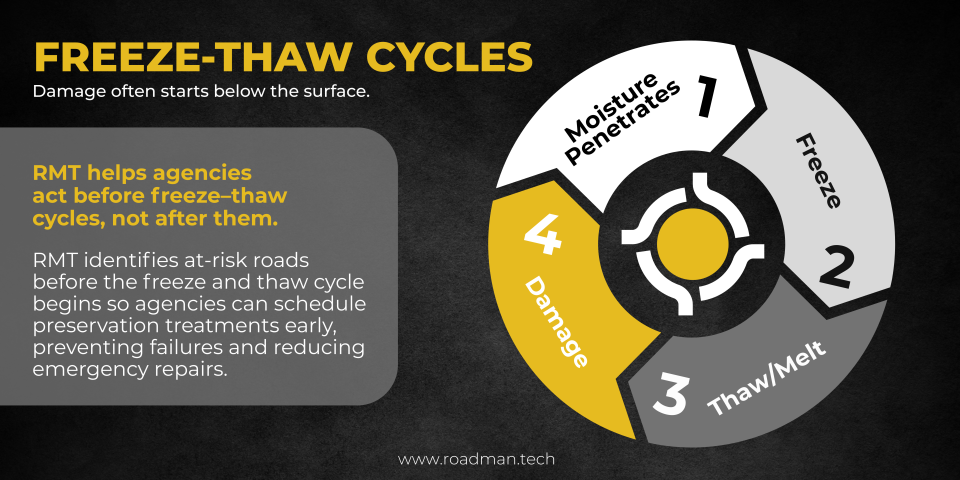
Using continuously collected roadway data through RMT, agencies can see which roads are deteriorating faster after winter events. Instead of waiting for complaints or annual inspections, staff can identify the roads most likely to fail next and target preservation dollars where they will have the greatest impact.
By pairing seasonal awareness with real-time insight, agencies move from reacting to deterioration to preventing it, reducing emergency repairs and keeping maintenance budgets under control.
Freeze–thaw cycles don’t just test pavement, they test strategy. Agencies that account for seasonal damage patterns are better positioned to control costs and extend pavement life.
Want to See What an Optimized Plan Looks Like?
The weather may feel unpredictable, but pavement performance doesn’t have to be. Understanding how freeze–thaw cycles affect your network now can make all the difference come spring. If your agency is ready to treat earlier, extend roadway life, and maximize every dollar spent, book a demo with RMT.